Stop Watching, Start Making: How Peer Envy Is Quietly Draining Your Creative Energy

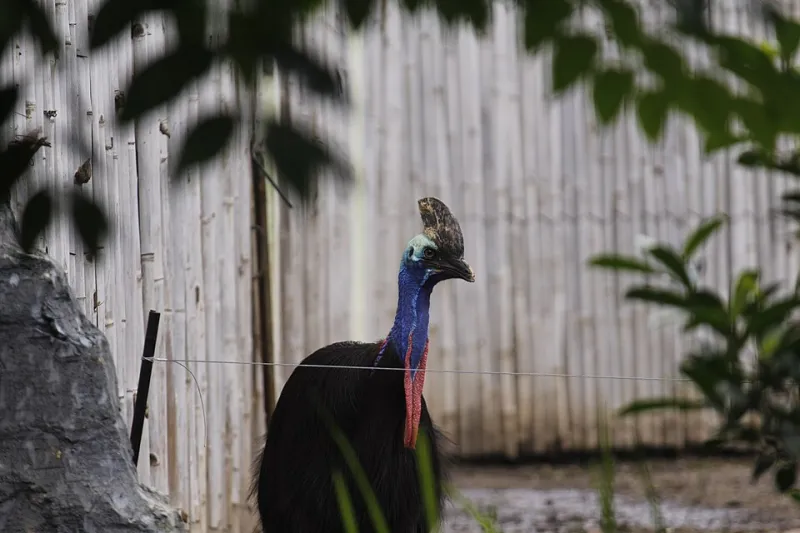
Photo: Photograph by Mike Peel (www.mikepeel.net)., CC BY-SA 4.0, via Wikimedia Commons
The Scroll That Stole Your Morning
You sat down to work. You had a concept brewing, a direction that felt genuinely exciting. Then, for just a second, you checked your phone. Twenty minutes later you're deep in someone else's portfolio, watching their reel rack up likes, reading the comments about how "incredible" and "next level" their stuff is.
You close the app. You open your project file. And suddenly, everything you were about to make feels smaller. Less worthy. Like a rough draft compared to a finished product that doesn't even exist in the same universe as yours.
That's the comparison trap. And if you're a creative — designer, filmmaker, writer, photographer, whatever — it's probably costing you more than you realize.
What's Actually Happening Up There
Here's the thing about comparison: it's not irrational. Your brain is doing exactly what it's designed to do. Humans are wired for social benchmarking. We measure ourselves against peers to calibrate where we stand, adjust behavior, and figure out what's worth pursuing. Back when your "peers" were the thirty people in your village, that was useful.
Now your peers are every creative on the planet with an internet connection and a decent lighting setup. The scale is completely broken.
What makes it worse is that you're not comparing apples to apples. You're comparing your behind-the-scenes — the messy draft, the client revision spiral, the project that's been sitting unfinished for three weeks — to someone else's highlight reel. Their best shot, best caption, best project, best moment. Curated and optimized for maximum impact.
Psychologists call this "upward social comparison," and research consistently shows it tanks motivation and self-efficacy. You don't just feel bad. You actually perform worse. Decision-making gets cloudy. Creative risk-taking drops. You start chasing what worked for someone else instead of trusting what works for you.
The Productivity Illusion
Here's a lie a lot of creatives tell themselves: "I'm not just scrolling, I'm doing research. I'm staying current. I need to know what's out there."
Sometimes, sure. Industry awareness is real and it matters. But there's a difference between intentional research and reflexive consumption. One is a tool. The other is a habit dressed up as professionalism.
When you're genuinely researching, you have a question you're trying to answer. You go in, find what you need, and come out. When you're caught in the comparison trap, you're just absorbing — taking in an endless stream of other people's finished work with no filter, no context, and no exit strategy.
The most productive creatives I've seen — and I've been lucky enough to work alongside some genuinely sharp people — often share one surprising habit: they're weirdly uninformed about what their peers are doing. Not because they're arrogant or out of touch, but because they've made a deliberate choice to protect their creative headspace.
Building a Better Consumption Diet
This doesn't mean you have to go full hermit and delete every social app. But it does mean getting intentional about when and how you take in other people's work.
Time-box your browsing. Give yourself a specific window — say, 20 minutes on Friday afternoon — to check in on the industry. Outside of that window, the feeds stay closed. It sounds rigid, but the structure is the point. You're not banning inspiration; you're scheduling it so it doesn't randomly detonate in the middle of your creative process.
Curate ruthlessly. Unfollow anyone whose work consistently makes you feel deflated rather than energized. This isn't about being petty. It's about recognizing that not all inspiration is created equal. Some accounts light a fire. Others just make you feel like you're losing a race you didn't sign up for.
Separate admiration from comparison. You can appreciate someone else's work without measuring yourself against it. Try engaging with creative work outside your immediate field — a ceramicist if you're a graphic designer, a poet if you're a filmmaker. You get the creative spark without the competitive undertow.
Create before you consume. Make this a rule. Before you check any feed, any inbox, any platform — do at least one thing on your own project. Even if it's small. This resets your brain's default mode from receiver to maker, and it's surprisingly hard to undo once you've started.
Your Work Doesn't Need to Win the Internet
Something worth saying out loud: not every piece of work needs to go viral, land on a major publication's radar, or generate a flood of DMs. Some of the most meaningful creative work is quiet. It solves a specific problem for a specific person. It shows up consistently without needing to be celebrated.
The comparison trap is partly a symptom of conflating visibility with value. Someone else getting a lot of attention doesn't diminish what you're building. The internet isn't a zero-sum game, even when it feels like one.
Your creative voice — the specific, weird, particular way you see things and make things — is only going to develop if you give it room to breathe. And it cannot breathe when you're constantly measuring it against everyone else's output.
Stop watching. Start making. The work you protect from comparison is usually the work worth keeping.