Your Best Ideas Are Dying Before You Even Say Them Out Loud
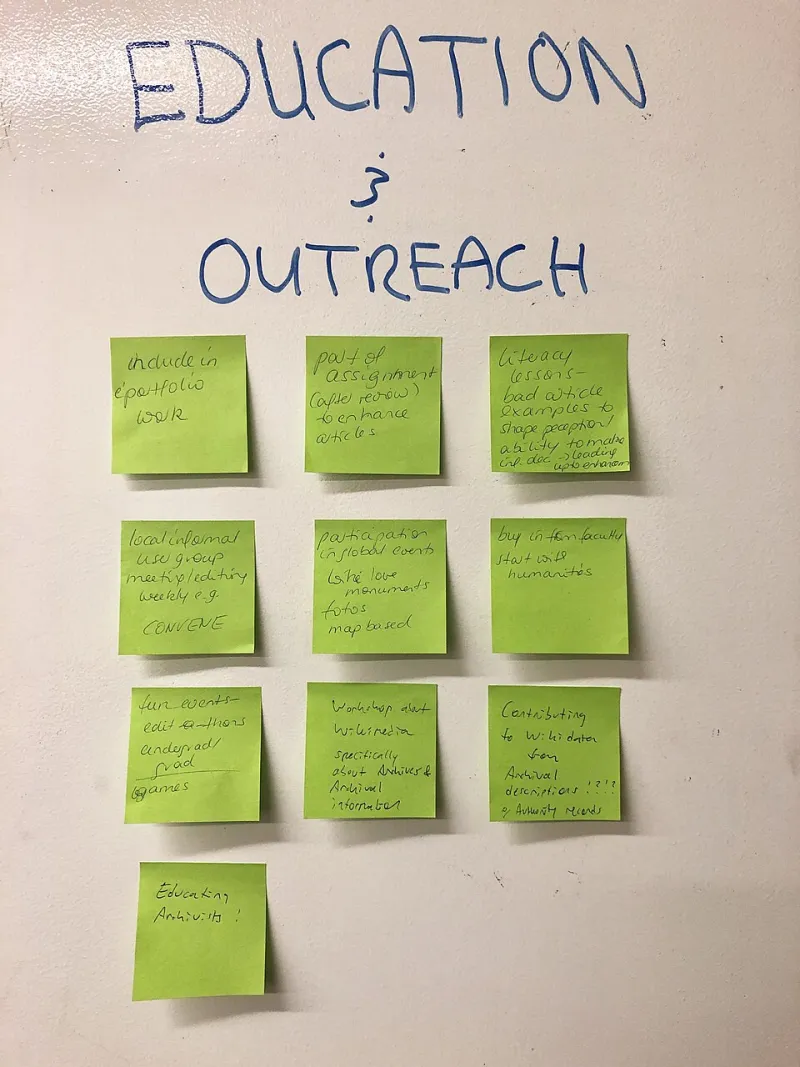
Photo: Chicagohil, CC BY-SA 4.0, via Wikimedia Commons
The Idea That Never Made It to the Whiteboard
Here's a scene you've probably lived before. You're sitting in a brainstorm session — maybe it's a conference room with sticky notes everywhere, maybe it's a Zoom call with a grid of tired faces — and something sparks in your brain. A genuinely weird, genuinely exciting idea. Your pulse ticks up a little. And then, before you even open your mouth, you talk yourself out of it.
Too out there. Too risky. They'll think I'm not serious.
You pivot to something safer. Something beige. The meeting ends, the beige idea gets greenlit, and somewhere in the back of your mind, the bold one quietly dies.
If that hits close to home, you're not alone — and you're not weak. You're experiencing what psychologists and creative professionals have started calling the creative confidence gap: the space between what you're actually capable of imagining and what you're willing to put on the table.
Why This Happens (And It's Not What You Think)
Most people assume self-censorship in creative spaces comes down to ego or fear of failure. And sure, those are factors. But dig a little deeper and the picture gets more interesting.
Designer and brand consultant Mara Delgado, who's worked with startups across the country from Austin to Brooklyn, puts it plainly: "The real killer isn't fear of rejection. It's anticipatory rejection. You're running a simulation of everyone's response before you've said a single word. And that simulation is almost always more brutal than reality."
She's right. Research in organizational psychology backs this up — people in group creative settings consistently underestimate how receptive their peers actually are to unconventional ideas. We imagine the eye rolls. We pre-load the sighs. We essentially do the critic's job for them, for free, before the critic ever shows up.
Writer and content strategist James Okafor — who's built a loyal audience in the personal finance space by consistently saying the thing nobody else wanted to say — describes a similar pattern early in his career. "I had this voice in my head that was basically a committee of everyone who'd ever doubted me. My old boss, a professor, a random commenter from 2017. Every time I wanted to pitch something bold, the committee convened. It took me years to realize I'd given a bunch of people who weren't even in the room veto power over my work."
The Brainstorm Room Is Broken by Design
Here's the uncomfortable truth: most creative environments are accidentally engineered to produce mediocrity. Traditional brainstorming setups — even the ones with all the right buzzwords plastered on the walls — tend to reward whoever speaks first, loudest, or most confidently. That's not a creative meritocracy. That's just a different kind of hierarchy.
Entrepreneur and creative director Simone Hartley, who now runs workshops on creative culture for teams at mid-sized companies across the Midwest, says the format itself is often the problem. "We ask people to be vulnerable and generative in the same moment, in front of an audience, with no warm-up. That's like asking someone to sprint before they've stretched. You're going to pull something."
Her fix? Separate the generative phase from the evaluative one. Give people space — even just ten minutes — to write down their raw, unfiltered ideas before the group discussion starts. "When you bring something to the table that already exists on paper, even just on a sticky note, it stops being 'my weird idea' and starts being 'this idea.' That small shift in ownership changes everything."
Practical Frameworks for Saving the Bold Stuff
So what actually works? A few approaches have shown up consistently across the creative professionals we talked to.
1. The 'Yes, And' Floor Rule Borrowed from improv comedy, this one's simple: during idea generation, no idea gets killed in the room. Every contribution gets a "yes, and" response before the group moves on. Evaluation comes later, in a separate conversation. This isn't about pretending every idea is good — it's about keeping the creative pipeline open long enough to find the ones that actually are.
2. Anonymous Idea Drops Tools like Google Jamboard, Miro, or even an old-school folded-paper system let people submit ideas without immediate attribution. You'd be amazed how much bolder people get when their name isn't attached in real time. Simone uses this in her workshops and says the quality of ideas from the first five minutes jumps noticeably.
3. The 10x Question Before any brainstorm, ask the group: "What would we pitch if we knew we couldn't fail and budget wasn't a constraint?" This single reframe loosens the grip of practical thinking just enough to let genuinely creative ideas surface. You can always scale back. You can't un-kill an idea that never got said.
A Quick Self-Assessment: Where Are You Holding Back?
Take two minutes and honestly answer these questions. No committee allowed.
- In your last creative meeting, did you share the first idea that came to you, or the safest one?
- When you have an idea you love, do you pitch it immediately — or do you sit on it until it feels "ready" (which sometimes means never)?
- Can you name three ideas you've had in the last six months that you never shared with anyone? What stopped you?
- Do you find yourself pre-editing your pitches based on who's in the room?
If you answered honestly and felt a little uncomfortable, that discomfort is pointing somewhere real. The creative confidence gap isn't permanent — but it doesn't close on its own.
The Compounding Cost of Playing It Safe
Here's what makes this worth taking seriously: the effects aren't just felt in one meeting. Every time you self-censor a bold idea, you're training yourself to do it again. The habit compounds. What starts as situational caution — not the right moment, not the right crowd — eventually becomes a creative identity. You start thinking of yourself as someone who doesn't have wild ideas, when really you're just someone who stopped letting them out.
James Okafor says the shift for him came when he started treating his boldest ideas like a muscle. "I made a rule: every week, I had to pitch or publish one thing that made me nervous. Not reckless, just uncomfortable. After about three months, the nervous feeling started showing up earlier in the creative process — which meant I was pushing further than I used to."
That's the goal. Not fearlessness — that's a myth. The goal is developing enough creative courage to let the idea exist outside your head long enough to find out if it's any good.
Because here's the thing nobody tells you: your best idea probably sounds a little crazy the first time you say it. That's not a red flag. That's a green one.