You're Actually Getting Good — So Why Does It Feel Like Time to Quit?
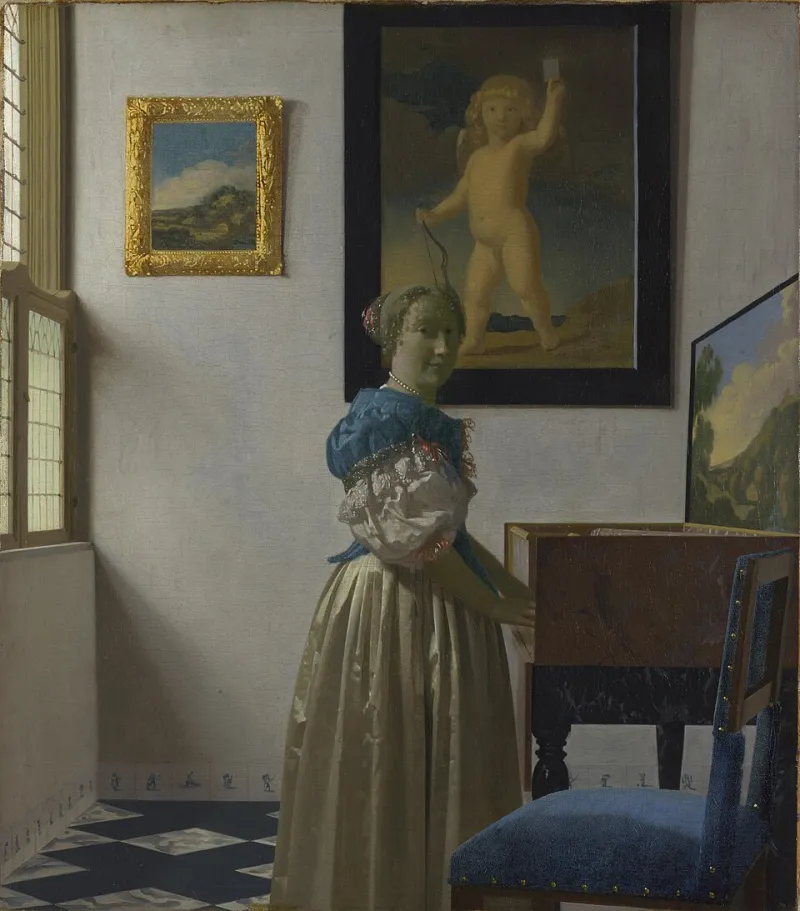
Photo: Johannes Vermeer, Public domain, via Wikimedia Commons
Somewhere between year two and year four of any serious creative pursuit, something weird happens. The work gets objectively better. Your eye sharpens. Your instincts stop embarrassing you. People start noticing. And then — almost on cue — you start thinking about doing something else entirely.
This isn't a coincidence. It's a pattern, and it's way more common than anyone talks about.
If you've ever abandoned a skill right when you were finally getting somewhere, you probably chalked it up to burnout, a shiny new interest, or just life getting in the way. But there's something more specific going on here, and once you see it, you can't unsee it.
The Boredom That Follows Competence
Here's the uncomfortable truth: the early stages of learning anything are genuinely exciting because you're constantly failing in new ways. Every session teaches you something. The gap between where you are and where you want to be is obvious, and closing that gap feels like forward motion.
But competence is quieter. Once you're good, the failures get subtler. The lessons get harder to find. The dramatic breakthroughs slow to a trickle, replaced by incremental refinements that are genuinely difficult to feel in real time.
Your brain, which lit up like a pinball machine during the learning phase, starts looking around for the next hit. And your creative work — the thing you've spent years building — starts to feel less like a discovery and more like a job.
Psychologists sometimes call this the "OK plateau," the point at which most people stop improving because they stop being challenged. But there's a layer underneath that nobody talks about enough: the emotional plateau. The place where the work is technically fine but personally hollow.
Why This Moment Is Actually the Peak
Here's the part that'll mess with you a little. That hollow feeling? It often shows up right when your work is at its best.
Think about musicians who put out their strongest album and then go completely left-field on the next one. Or writers who finish their most polished manuscript and immediately want to blow up their whole style. Or designers who finally nail a cohesive visual language and then feel an overwhelming urge to start over from scratch.
From the outside, it looks like self-sabotage. From the inside, it feels like restlessness. But what's actually happening is that mastery and passion are running on different timelines. Mastery is slow and cumulative. Passion is hungry and impatient.
By the time your hands know what they're doing, your curiosity has often already moved on.
The Trap Hidden Inside the Comfort Zone
The cruel irony of the comfort trap is that it doesn't feel comfortable — it feels like stagnation. You're not struggling anymore, which means you're not growing in the way that used to feel so alive. The work comes easier, which somehow makes it feel less meaningful.
So you start scrolling through other people's creative paths. You download apps for new skills. You tell yourself you've "taken this as far as it can go." And then you leave, right before the interesting part.
Because here's what most people miss: the skills you've built don't disappear when the passion cools. They're sitting there, fully loaded, waiting for a reason to fire. The problem isn't the craft — it's that you haven't given the craft a new problem to solve.
Three Ways to Break the Pattern Before You Bail
Change the constraint, not the medium. If you're a photographer bored with your own shooting style, don't switch to video — shoot with one lens for six months, or commit to black and white only, or limit yourself to one location per week. Artificial constraints force your existing skills into unfamiliar territory, which resurrects the challenge without making you start from zero.
Teach it. There is no faster way to rediscover what's interesting about something than trying to explain it to someone else. Teaching exposes all the stuff you've been doing on autopilot. It forces you to articulate things you've internalized, and in doing so, it makes the familiar strange again. Start a YouTube channel. Mentor someone. Write a guide. Whatever form it takes, the act of teaching reactivates curiosity in a way that solo practice rarely can.
Combine it with something you're terrible at. This one's underrated. Take the skill you've mastered and deliberately collide it with something you're a complete beginner at. A seasoned illustrator picking up ceramics. A veteran copywriter learning to code. A polished podcast host trying stand-up comedy. The contrast is the point. You bring real craft to the new thing, and the new thing brings genuine discomfort back to your creative life. Both sides benefit.
When Leaving Is Actually the Right Call
Not every creative pivot is avoidance. Sometimes the passion genuinely has run its course, and the healthiest move is an honest transition rather than forcing enthusiasm you don't have.
The key is knowing the difference. Are you leaving because the work has stopped challenging you, or because you've stopped challenging the work? One is a signal to evolve. The other is a reason to stay and push harder.
If you've tried the constraints, done the teaching, smashed two skills together, and still feel nothing — that's real information. Honor it. The skills you've built don't vanish when you walk away from one application of them. They transfer. They show up in the next thing in ways you won't expect.
Leaving with intention is completely different from leaving out of boredom you mistook for wisdom.
The Moment Worth Recognizing
If there's one thing to take from all of this, it's to pay attention to the specific moment when your work gets easier and your enthusiasm cools at the same time. That's not the end of something. That's the fork in the road.
You can mistake it for a sign to quit. Or you can recognize it for what it is: proof that you've actually arrived somewhere. And arriving somewhere is exactly when the interesting choices begin.
The creators who build lasting bodies of work aren't the ones who always feel fired up. They're the ones who learned to recognize the comfort trap before it swallowed them whole — and figured out how to make their own best skills feel dangerous again.