Tiny Drops, Big Ocean: How Sharing Small Wins Every Day Builds the Audience That Actually Sticks Around
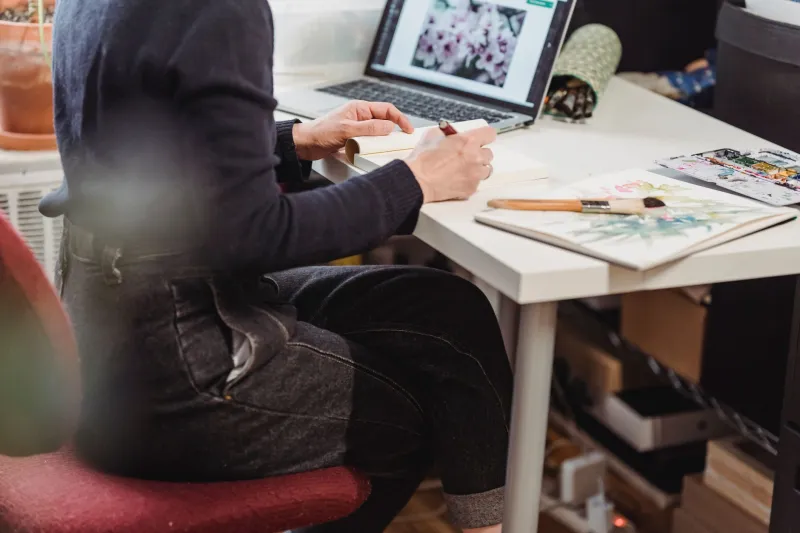
Everybody wants the big moment. The post that blows up overnight, the video that cracks a million views before you wake up, the project that lands you on someone's radar in a single, glorious afternoon. And look — that stuff happens. But for every creator who catches that wave, there are thousands of equally talented people who built something far more durable without a single algorithmic miracle. They just kept showing up. Kept sharing. Kept dropping small, honest slices of their work into the world until, almost without noticing, they had an audience that genuinely gave a damn.
That's the compounding effect of showing your work. And most people completely underestimate it.
The Math Nobody Talks About
Here's a thing about compounding: it looks like nothing for a long time, and then it looks like everything all at once. You've heard this applied to money, to habits, to fitness. But it works exactly the same way with creative visibility.
When you share a rough sketch, a half-finished idea, a behind-the-scenes look at a project that might not even work out — you're not just posting content. You're planting a signal. That signal says: I'm here, I'm working, and I'm not pretending this is easy. The people who find that signal and resonate with it? Those are your people. Not the drive-by clickers. Not the passive scrollers who double-tap and forget. The ones who come back.
And here's the kicker — those people talk. They share your work in Slack channels and group chats and Discord servers. They tag their friends with a "you need to see this person's process." They become the quiet engine of your growth, and they stick around when the algorithm stops favoring you, which it will, because it always does.
Process Over Polish: The Counterintuitive Move
Most creators are terrified to show the messy middle. The draft that's going nowhere. The color palette you abandoned. The concept that sounded brilliant at 2 a.m. and looked embarrassing by noon. There's this deeply ingrained instinct to only publish the finished, polished, ready-for-the-world version — and it's quietly killing your connection to the people who might love your work the most.
Think about the creators you actually follow closely. Not the ones with the biggest numbers — the ones you care about. Odds are, part of what keeps you engaged is feeling like you're in on something. Like you've watched them wrestle with a problem, pivot, scrap something, and eventually land somewhere interesting. That journey is the content. The destination is almost secondary.
Austin Kleon built an entire book around this idea — Show Your Work! — and it resonated so hard because it named something creators already sensed but were afraid to act on. The work-in-progress is not a liability. It's an invitation.
What "Small Shares" Actually Looks Like
Let's get concrete, because "share your process" can feel vague to the point of useless. Small shares don't have to be elaborate. They don't require a content calendar, a ring light, or a perfectly crafted caption. Here's what they actually look like in practice:
- A photo of your workspace mid-project, before the cleanup, before the final render, before you've figured out if it's even good yet.
- A quick note about what you're trying to solve — not the answer, just the problem. "Trying to figure out how to make this transition feel less clunky. Open to ideas."
- A dead end, honestly labeled. "Spent three hours on this direction. It's not it. Moving on." That kind of transparency is magnetic.
- A question you're genuinely sitting with about your craft, your niche, your next move.
- A small win that wouldn't make the highlight reel — finishing a rough draft, figuring out a technique you've been struggling with, finally getting the lighting right on something.
None of these are viral material. All of them are relationship material. And relationships compound.
The Audience You'll Actually Want
Here's something worth sitting with: the audience you build through consistent small sharing is fundamentally different from the one you'd get from a viral moment. And not just in size — in character.
Viral audiences are curious but shallow. They showed up because something was entertaining or surprising or perfectly timed. A percentage will stick around, but most won't. The algorithm brought them, and the algorithm will take them away.
The audience built through slow, consistent exposure to your actual process? They showed up because of you. Because something in how you think or work or explain your decisions resonated with them on a level that's harder to manufacture and much harder to lose. These are the people who buy things, who share things, who commission things, who refer things. These are the people who make a creative career actually sustainable.
Photographer and educator Chase Jarvis has talked for years about how his most loyal community came not from his best work, but from the conversations around his work — the behind-the-scenes, the "here's how I think about this" posts that had nothing to do with going viral. Filmmaker Casey Neistat built a massive following on YouTube not just through production quality but through the relentless, almost diary-like documentation of his creative life. The process was the product.
Starting Today, Not When You're Ready
The trap most creators fall into is waiting until there's something "worth" sharing. Until the project is further along. Until the skill level is higher. Until the platform is bigger. It's a logical instinct that quietly adds up to years of silence and zero compounding.
You don't need a finished thing to share. You need an honest thing. A real thing. Something that gives someone else a window into what you're actually doing and thinking right now.
Start small. One post a week where you show something unfinished. One story where you admit you're not sure if the direction you're taking is right. One caption where you explain the decision behind a creative choice instead of just presenting the result. These aren't big asks. But over months and years, they add up to something genuinely irreplaceable: a body of work that shows not just what you made, but who you are when you're making it.
That's the audience worth building. And it starts with the smallest, most honest share you can make today.