That Wall You Keep Hitting Isn't the End — It's the Door
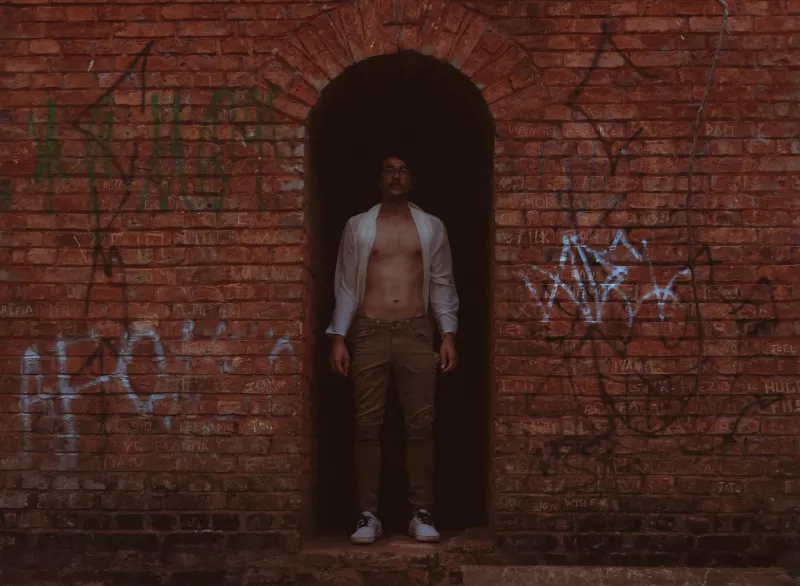
There's a specific kind of dread that settles in when progress stops. You were moving, building, stacking wins — and then one day you weren't. The work that used to flow starts feeling forced. The projects that once excited you feel like obligations. You look at your output and think, is this it?
Most creators at this point do one of two things: they push harder, grinding against the wall until they burn out completely, or they quietly give up and call it a natural ceiling. Both responses are wrong. Both responses are understandable. And both responses are based on a fundamental misread of what's actually happening.
A plateau isn't a dead end. It's a signal.
The Framework That Built You Is Now Trapping You
Think about how you learned to do what you do. You picked up a process, a style, a set of rules — whether someone taught them to you or you figured them out yourself. That framework was essential. It gave you structure when you had nothing else. It helped you produce work when you were still figuring out who you were creatively.
But frameworks have a shelf life.
When you hit a plateau, it's often because your instincts, taste, and ambition have quietly evolved past the tools you're using to execute. You're operating a 2025 creative mind inside a 2019 workflow. The frustration you feel isn't failure — it's friction. The gap between what you sense is possible and what your current approach can actually deliver.
That gap is uncomfortable. It's supposed to be.
The Uncomfortable Middle Has a Name
In psychology, there's a concept called the competence-confidence cycle. When you're learning something new, you're too inexperienced to know how bad you are, so you move freely. Then you get good enough to recognize your own limitations, and everything slows down. That middle zone — where you're skilled enough to have standards but not yet skilled enough to consistently meet them — is brutal.
Ira Glass described it perfectly when talking about creative work: your taste develops faster than your ability. You can see the gap. And seeing the gap clearly can feel like failure even when it's actually evidence of growth.
The plateau is often just that gap made visible.
Creators who push through it don't do so by ignoring the discomfort. They do it by reframing what the discomfort means. It's not a sign you've maxed out. It's a sign you're ready for a harder level.
Case Study: The Musician Who Had to Unlearn to Grow
Consider what happened with a lot of artists who came up in the SoundCloud rap era. Producers who built their entire identity around lo-fi aesthetics, trap hi-hats, and a specific sonic signature. For a few years, that sound was their rocket fuel. Then the culture moved, their own ears got more sophisticated, and suddenly the thing that made them stand out started making them feel stuck.
The ones who broke through didn't just update their equipment or copy whatever was trending. They went back to fundamentals — music theory, arrangement, different genres entirely — and came out the other side with something that felt genuinely new. The plateau forced a reconstruction. The wall was the door.
The ones who didn't make it through either kept making the same music until it felt hollow, or they quit and blamed the industry. Neither group was wrong about the difficulty. They were wrong about what it meant.
How to Tell the Difference Between a Dead End and a Pivot Point
This is the real question, right? Because not every creative direction deserves to be pushed through. Sometimes you genuinely are in the wrong lane. So how do you know?
Here are a few honest questions worth sitting with:
Are you bored or are you scared? Boredom usually signals you've genuinely outgrown something. Fear usually signals you're close to a breakthrough and your brain is trying to protect you from the exposure. They feel similar from the inside, but they point in opposite directions.
Is the work getting worse or just different? When you're evolving, early experiments in a new direction often look messier than your polished old work. That's not regression — that's the price of expansion. If you're comparing your rough new experiments to your refined old output, you're rigging the game against yourself.
What would you do if starting over? If you could begin fresh with everything you know now, would you even start down the same path? The answer tells you whether you're hitting a wall in something you still care about, or whether you've just been too invested to admit you've moved on.
The Pivot Isn't a Betrayal
One of the messiest parts of pushing through a creative plateau is the identity stuff. If you've built an audience, a reputation, or even just a self-image around a particular kind of work, evolving past it can feel like betrayal. Of your audience, of your past self, of the work that got you here.
Let that go.
Every creator who's done something lasting has had at least one moment where they had to shed a skin. Dylan went electric. Kanye went gospel. Spielberg went from Jaws to Schindler's List. The pivot isn't the end of the story — it usually is the story.
Your audience didn't fall in love with your framework. They fell in love with your perspective, your energy, your point of view. Those things survive evolution. The specific execution doesn't have to.
What to Actually Do When You're in the Middle of It
If you're reading this and recognizing yourself in it, here's what actually helps — not in a motivational poster way, but practically:
Stop consuming work in your lane for a minute. When you're stuck, looking at what everyone else in your field is doing usually makes it worse. Go sideways. Read about architecture, study film editing, listen to jazz. Cross-pollination has broken more plateaus than any amount of grinding within your own genre.
Make something with no stakes. The plateau is often maintained by performance anxiety — the sense that everything you produce has to justify itself. Make something just for you. Something you'd never show anyone. Give yourself permission to be bad on purpose.
Talk to someone who knew your work early. Not for validation — for perspective. Someone who watched you grow can often see the evolution you're too close to recognize.
And most importantly: don't decide anything yet. The wall is real, but what it means is not yet determined. Stay in it long enough to find out whether it's an ending or an entrance.
Most of the time, it's an entrance.